
The Emergence of The Prince of Wales School
Recent News & Articles
Tribute to SHA Sawyerr, Former Principal of the Prince of Wales School
POWSAF interviews Dr. Rod King, Inventor of the Fractal Grid Technology (FGT); Part 3 – The application and use of FGT for Sierra Leone
POWSAF interviews Dr. Rod King, Inventor of the Fractal Grid Technology (FGT); Part 2 – The application and use of FGT for the Prince of Wales School
POWSAF interviews Dr. Rod King, Inventor of the Fractal Grid Technology (FGT); Part 1 – Dr. King and the Prince of Wales School
The First Girls at The Prince of Wales Secondary School
The Prince of Wales School Teaching Staff, 1968
The Prince of Wales School Football Team, National Champions—1951
HRH The Prince of Wales Visit, 6th April 1925
Tribute to Archimedes Faulkner, Founding Trustee of POWSAF
 It has been said that the Government Model School could be rightly called the mother of the Prince of Wales School. The late Sylvanus Juxon-Smith entered the Government Model School in the year 1917 and was in Class 2, under E.W.B. COLE, M.A., later to be known as the Revd, E.B. COLE. He worked up to Class 5, the then top class in the school. Juxon-Smith recalls that the Revd. W.T. THOMAS, M.A. was then the Head Master, and the Principal was Mr. H. Evans, Bsc. However, in 1922, Juxon-Smith reports that they were transferred to the newly opened Government Secondary School, housed in the same premises but distinct from the Government Model School, in the building formally used by the Manual Training School. He recalls that Mr. H. Evans was still the Principal, and the well-qualified teachers included Mr. E.W. Turner, M.A; Revd. Ejesa Osora, M.A. Oxon; and Mr. R.B. Mark, B.A., BCL, LLB.
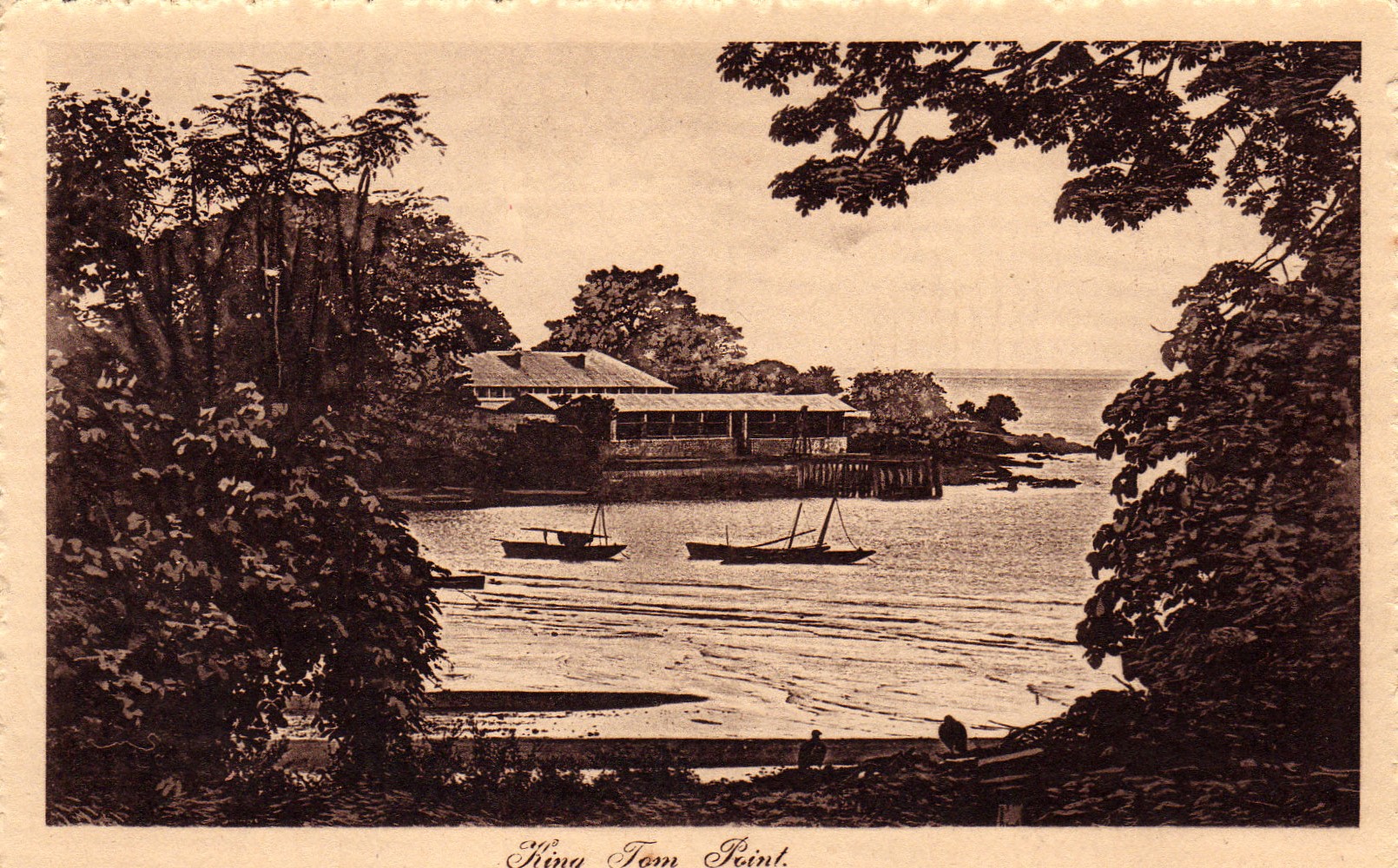
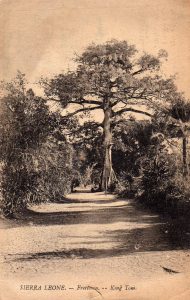
At that time, the Government of Sierra Leone had been making efforts to acquire a suitable site for the newly created Government Secondary School which they located in Kingtom. The site had formerly been owned by the Sierra Leone Coaling Company and used as a Coaling Station and came with its very own derelict jetty at the back of the main building. The site had initially been acquired by the Wesleyan Methodist Mission, but then they sold it to the Government of Sierra Leone for the purposes of being the new home of the Government Secondary School.
The Government then procured general repairs and the refurbishment of the old building and, in October 1924, after the refurbishment had been completed, the Government Secondary School was transferred from the premises of the Government Model at the junction of Circular Road and Berry Street to the school site at Hennessy Square, Kingtom as it was previously known. The Hennessy Square site was full of mature vegetation and several large cotton trees. Juxon-Smith writes that it was a great day for all pupils when the lorries from the Public Works Department (P.W.D.) arrived at the Circular Road site for the decanting operation.
 The pupils were all very much excited, delighted, and happy, and enjoyed loading the school’s desks, blackboards, etc., on the lorries and making the numerous trips to Kingtom and back. They enjoyed the whole operation with pleasure and pride. Even after the school was in full operation and with an addition of pupils and staff, it was still known as the Government Secondary School until the visit of HRH The Prince of Wales in 1925.
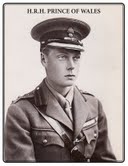
On the 5th of April 1925, The Prince of Wales arrived in Freetown on the HMS. Hood, with many other battleships in the convoy. The HMS Hood had been a battlecruiser of the Royal Navy (RN). The HMS Hood was the first of four planned Admiral-class battlecruisers to be built during the First World War but eventually was the only one built.
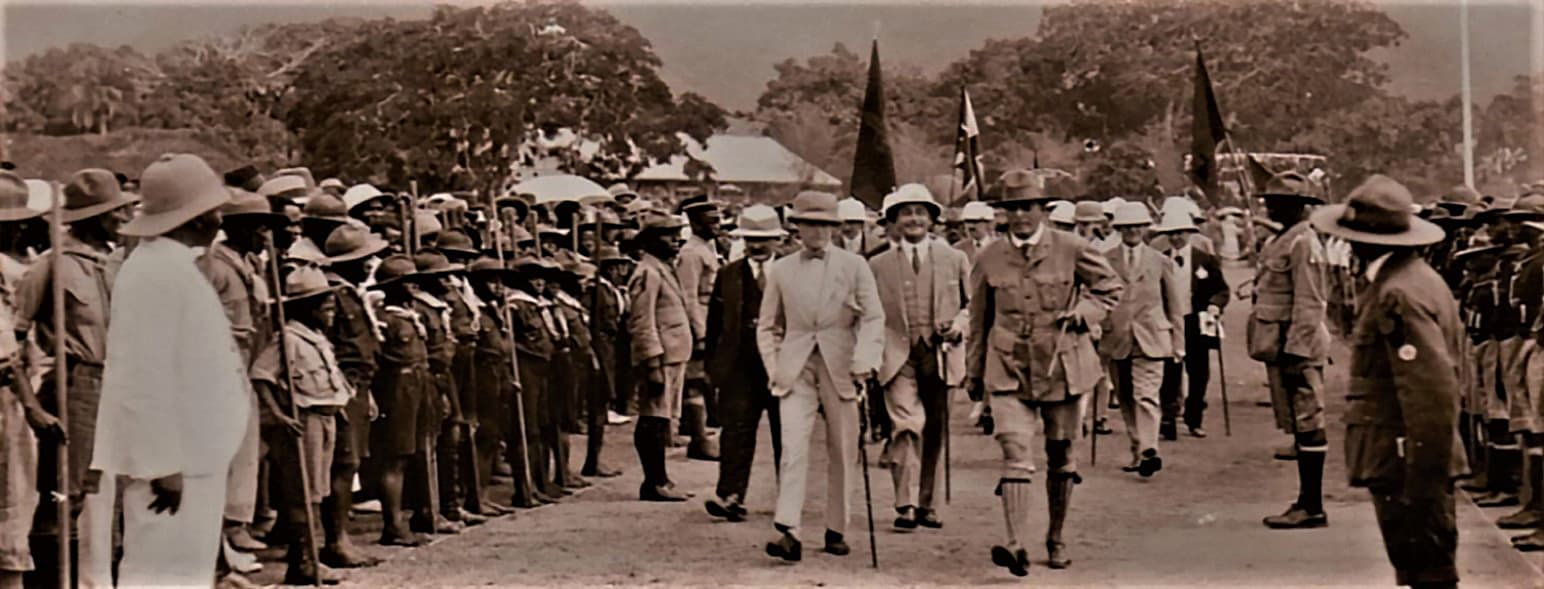
On the 6th of April 1925, Royal Highness arrived at the grounds of the relocated school for the grand reopening ceremony. The pupils were all lined up in front of the main building on two flanks, facing each other. The Principal and Vice Principal received H.R.H. The Prince of Wales after alighting from his car and escorted him to the entrance of the Main Building. His Royal Highness was then greeted outside the entrance of the building by the first Head Prefect Mohammed Sanusi Mustapha (Admission Number 2) and whilst the doors were shut still, presented him with a Gold Key with which he officially opened the door to the Main Building.
HRH The Prince of Wales, escorted by the Principal and Vice Principal, then did a tour of the Main building and the two Science Blocks: Chemistry and Physics. He watched some experiments in the Chemistry Laboratory by the then Laboratory Assistant, Mr. Arawala Miller. After the tour of the school facilities, he returned to the entrance of the building, where all the pupils were still lined up. Sanusi Mustapha, delivered the welcome address, after which His Royal Highness responded and named the school, THE PRINCE OF WALES SCHOOL. HRH The Prince of Wales then stated that the FOUNDATION DAY of the School would henceforth be the 6th of April and that the school would share his birthday 23rd of June.
HRH the Prince of Wales then proceeded to shake hands with each pupil in the lineup. There were 117 pupils on the Admissions Register at that time. After this, he was introduced to the Principal and Staff, who were all dressed up in their full academicals. The tradition of dressing up in full academicals for important school occasions was upheld all the way to the early 1970s. HRH the Prince of Wales shook hands with each member of staff. Apparently, his greatest moment was his reunion with Revd. Osora, with whom he had studied at Oxford University several years earlier. They really had a memorable greeting accompanied by a little chat. The ceremony ended with loud cheers from the pupils, for “Edward – The Prince of Wales”.
Up to this stage, there was no formal school uniform, and Juxon-Smith records that the Principal and Staff decided that the pupils should attend school in white trousers with a navy-blue jacket. Little is known of the subsequent development of the uniform, taking on board the climate and practicability. Suffice it to say that the everyday uniform became the khaki shorts and white shirt with the ceremonial uniform being the customary white suit, boater, and green school tie leading to the coined-up phrase ‘san ten ghost’ to describe Princewaleans in their ceremonial uniform.
Juxon-Smith continued to explain that on the following day, the 7th of April 1925 (which was a Tuesday), the whole school; Principal, Teachers, and Pupils all congregated at the school’s former premises, the Government Model School, from where they marched along Circular Road to the Parade Grounds at Tower Hill. At the Parade Grounds, they were greeted by other schools in the city who had assembled to welcome THE PRINCE OF WALES SCHOOL as the newest secondary school in Freetown. Then HRH, THE PRINCE OF WALES, marched into the Parade Grounds and there was an even greater ‘thunderous ovation of Jubilation’ from the crowd.
YES! HRH THE PRINCE OF WALES had created a remarkable impact on the people of Freetown.Juxon-Smith described His Royal Highness, the Prince of Wales as a man of medium built, height about 5ft 3ins., dressed in Shantung suit, with a smart shaped khaki helmet, which afterward became known in Freetown as the Prince of Wales helmet, together with brown suede shoes and curved handle cane walking stick. It appeared that the pupils admired his sartorial elegance as Juxon remarked in his article, “and o boy, see how he marched along, he was a real bluffman.” HRH the Prince of Wales also had on a gold watch and gold bracelet with the inscription; ‘Edward P’. Juxon-Smith recalled that he knew this for certain because he had a really good look at HRH and took a good mental photograph of him as he stood very near him.
Juxon-Smith concludes his article by reflecting that even in 1925, the Prince of Wales School was an exemplar of multi-faith coexistence. He recalls that in their first thanksgiving which was held at the Manual Training Building on the right-hand side of the school’s Main Building. The First Christian and Muslim Services were conducted by school pupils: the Christian Service by Harry Sawyerr (who later became Rev. Professor Harry Sawyerr), and the Muslim Service was conducted by Sanusi Mustapha (a pupil who later became the Hon. Alhaji Dr. Mohammed Sanusi Mustapha and Vice President of the Republic of Sierra Leone) in collaboration with Madiana Sanusi. There was no band and no marching after the service. The pupils only enjoyed their own ‘company and a brief reunion’ amongst themselves.
As we commemorate the founding of THE PRINCE OF WALES SCHOOL, these are the names of the first set of pupils registered on Foundation Day on April 6th, 1925, in order of their registration numbers:
The Prince of Wales School Registration List - 1925 |
|||||
|---|---|---|---|---|---|
| 1 - 20 | 21 - 40 | 41 - 60 | 61 - 80 | 81 - 100 | 101 - 120 |
| Ernest French | Alfred Cole | Eldred Wright | Elkanah Fyle | Yadali Alghali | Samuel King |
| Sanusi Mustapha* | Jabez Williams | Jonathan Shaw | Christopher Greene | Othman Ahmad | Randolph Leigh |
| Thomas Boston | Saidu Nicol | James Kude | William Greywoode | Nathaniel Bull | Charles Lefevre |
| George Hamilton | Colin Walton Macauley | James Davies | Charles Hamilton | William Bultman | George Macauley |
| Benoni Cole | Sulvan Faux | Henry Harper | Abu Bakar Ibrahim | Adiai Cole | Samuel Macauley |
| Madiana Sanusi | Samuel Johnson | John Roberts | Isaac Lardner | Christian Cole | Thomas Macauley |
| Sylvanus Juxon-Smith** | Alexander Yaskey | Henry Bernard | Charles Leopold | Rowland Cole | Henry Nicol |
| Adeyemi Tuboku-Metzger | Leslie Yaskey | Daniel Johnson | Joseph Roy-Macauley | Theophilus Cole | Duke Smith |
| Arthur Nelson-Williams | Harry Sawyerr | Joseph Short | Eustace M'Cormack | Nathaniel Crawford | Thomas Taylor |
| Collin Shaw | Prince Buck | Alfred Campbell Jr. | Samuel Metzger | Rowland Cummings | Conrad Thomas |
| Arthur Wellesley-Cole | Thopik Bangurah | Edmund Cole | Malcolm Parker | Ernest Dawson | David Jones |
| Eustace Baxter | Thomas Harding | Leslie Asgill | Egbert Richards | Samuel Dove | Abel Wells |
| Charles Thomas | John Sawyerr | Augustus Coker | Alfred Sangster | Joseph Dougan | Isaac Noah |
| Cyril Rogers Wright | Samuel Davies | Abayomi Cole | Cyril Smith | Beale Elliott | Karimu Cole |
| Sydney Dixon | John Hoyte | Amadu Cole | Melville Stober | Horatio Elliot | Beresford Johnson |
| Mohamed Mahdi | John Elliot | Edward Cole | Samuel Wright | Joseph Elliot | Isaac Coker |
| Reynold Peacock | Claudius Jones | Samuel Cole | Eric Taylor | Emanuel Fowler | Bulhari Alhassan |
| Dephon Thompson | Theophilus Johnson | Joachim Dalmeida | John Dupigny | Philip Hazeley | |
| Leslie Thompson | Winston Decker | Franklin Davies | Jessie Reffell | Faltihu Iscandari | |
| Arthur Smart | Egbert Harding | Samuel Foster | Frank Ashley | Muktahr Kanasie | |
Prepared from an article with original contents courtesy of Mr. Francis Galba Bright & Dr. Kayode Robbin-Coker – Former Presidents – POWAA-UK based on the article “The Prince of Wales School – Its Emergence and First Thanksgiving Service” – By the Late Sylvanus Juxon-Smith**
*His Royal Highness was greeted outside the entrance of the building by the first Head Prefect Mohammed Sanusi Mustapha (Admission Number 2) and presented him with a Gold Key with which he officially opened the door to the Main Building.
** Sylvanus Juxon-Smith was part of the first crop of pupils admitted into Form 4 at the Prince of Wales Secondary School. The first pupils were formally registered in January 1925.